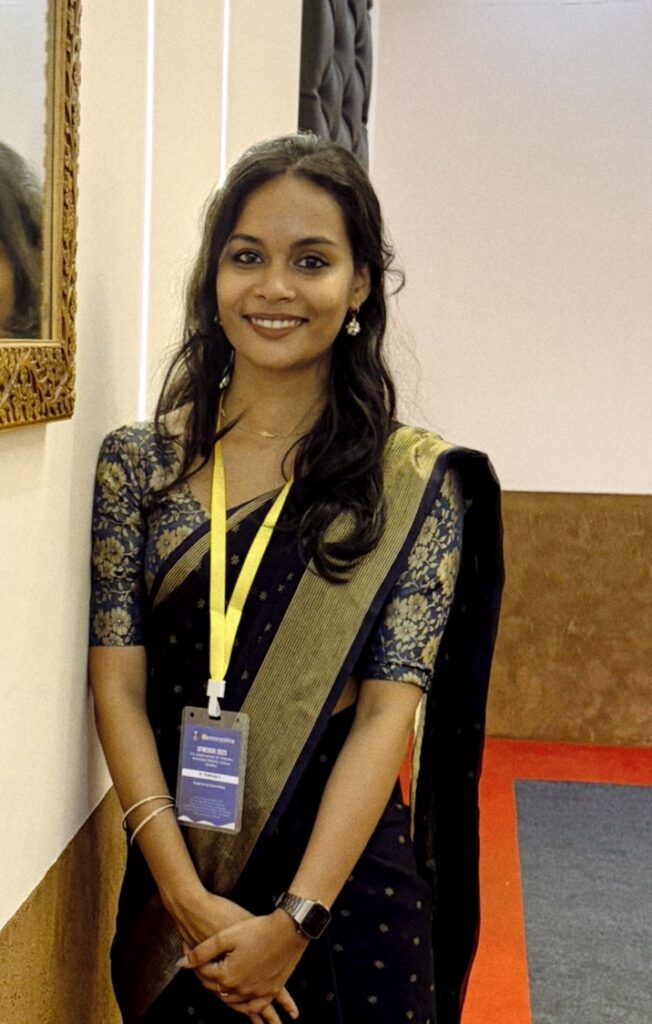


Dr. Muhammad Arif bin Jalil is an academician and researcher in the field of Physics, with academic and professional activities centred on optics, photonics, fibre-optic technology and related emerging technologies. He is affiliated with the Department of Physics, Faculty of Science, Universiti Teknologi Malaysia (UTM), where he is actively involved in teaching, research, postgraduate supervision, curriculum development, academic quality assurance, and professional academic activities.His teaching and academic expertise encompasses Applied Optics, Optical Fibre Technology, and photonics. He has extensive experience in Outcome-Based Education (OBE), curriculum and assessment design, CLO–PLO mapping, Bloom’s Taxonomy, and the development of innovative teaching and learning approaches. His educational practices incorporate active learning, problem-based learning (PBL), work-based learning (WBL), digital learning, simulation, and emerging technologies.His research interests focus particularly on fibre-optic sensors, Fibre Bragg Grating (FBG) technology, optical fibre communication, optical instrumentation, holography, nonlinear optics, multilayer optical structures, and computational modelling of optical systems. His research activities include the development and simulation of advanced FBG structures, strain and temperature sensing, optical sensing systems, transfer matrix modelling, coupled-mode analysis, uncertainty analysis, and the application of artificial intelligence and machine learning for optical sensing and prediction. He is also interested in interdisciplinary applications of photonics and optical technologies in engineering, materials, infrastructure monitoring, and industrial applications.In addition to teaching and research, Dr.Muhammad Arif is actively involved in academic quality management and programme accreditation activities, including the preparation of course files, assessment documentation, continuous quality improvement (CQI), and MQA-related academic requirements. He contributes to the continuous enhancement of teaching quality through systematic analysis of student achievement, learning outcomes, assessment performance, and curriculum effectiveness.He has also been involved in academic and professional activities beyond his core teaching responsibilities, including research collaboration, academic networking, postgraduate student development, manuscript reviewing, editorial activities, and participation in international academic and professional initiatives. His academic interests extend to strengthening international collaboration, promoting research-led education, and developing opportunities for postgraduate research and global academic engagement. Dr.Muhammad Arif is committed to developing meaningful connections between fundamental physics, advanced optical technologies, education, and real-world applications. His academic philosophy emphasises continuous improvement, innovation, interdisciplinary collaboration, and the development of graduates who are capable of applying scientific knowledge to solve contemporary technological and societal challenges. Through his teaching, research, supervision, and academic service, he continues to contribute to the advancement of physics education, photonics research, and higher education at national and international levels.