

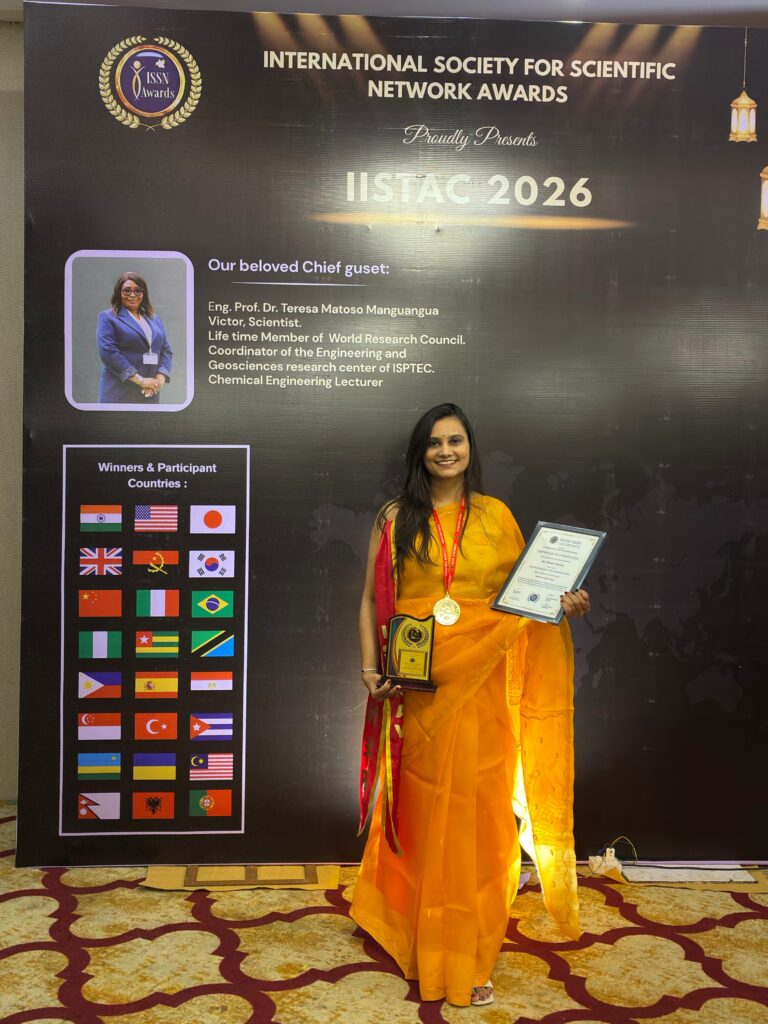
Dr. Shivani Sharma is an Ayurvedic physician, researcher, women’s health professional, and the Founder of Ayornish, a healthcare ecosystem platform envisioned to make healthcare more connected, accessible, and patient-centred. She currently serves as an Assistent Professor at Bharti Ayurved Medical College & Hospital, Durg, Chhattisgarh, and has approximately seven years of clinical and professional experience. Dr. Shivani completed her Bachelor of Ayurvedic Medicine and Surgery (BAMS) from Chhattisgarh Ayurved Medical College, Manki, Rajnandgaon, Chhattisgarh, followed by postgraduate specialization in Prasuti Tantra Evam Stri Roga from Sri Jayendra Saraswathi Ayurveda College & Hospital, Chennai. Her principal areas of clinical interest include gynecology, infertility, women’s health, reproductive wellness, Panchakarma, and Ayurvedic approaches to musculoskeletal conditions including arthritis.
Dr. Shivani’s professional training extends beyond her academic qualifications. She has completed structured training in Panchakarma at the National Ayurveda Research Institute for Panchakarma under the Central Council for Research in Ayurvedic Sciences (CCRAS), Ministry of AYUSH, Government of India. Her additional training includes Marma Chikitsa, Nadi Pariksha, medical ethics, and clinical embryology. Her clinical experience includes women’s health consultation, infertility-focused counselling, preconception care, antenatal and postnatal Ayurvedic support, reproductive wellness, lifestyle guidance, and individualized treatment planning.
Her research interests are particularly focused on women’s reproductive health and the clinical exploration of classical Ayurvedic therapeutic principles in contemporary healthcare settings. Her research paper, “Sthanik Chikitsa for Karnini Yonivyapad: Clinical Revalidation of Classical Vaginal Therapies in Cervical Erosion – Case Study,” was published in the International Ayurvedic Medical Journal in May 2025. The study explored the clinical application of Sthanika Chikitsa in the management of cervical erosion, correlating the condition with Karnini Yonivyapad and examining localized Ayurvedic interventions such as Yoni Prakshalana and Yoni Pichu along with holistic management.
In the reported case, the patient experienced significant improvement following treatment, including resolution of vaginal discharge and itching, improvement in associated symptoms, and clinical healing of cervical erosion. The work highlighted the potential of localized Ayurvedic therapeutic approaches in supporting symptom management and tissue healing, while also emphasizing the importance of continued clinical research and scientific evaluation of traditional treatment principles.
Dr. Shivani’s contribution to research in this field was recognized through the ISSN Awards – Best Researcher Award. Her wider academic and research work has included studies related to Vandhyatva, or infertility due to anovulation, along with academic presentations in the areas of Garbhini Paricharya, reproductive health, maternal wellbeing, and Ayurvedic approaches to women’s healthcare. She has also participated in national and international academic forums focused on Ayurveda and its evolving role in contemporary healthcare.
Beyond clinical practice and research, Dr. Shivani’s professional vision focuses on improving continuity of care and strengthening connections between patients, healthcare professionals, and essential health services. This vision led to the founding of Ayornish, conceived as an integrated healthcare ecosystem intended to bring different healthcare disciplines, professionals, services, and patients into a more coordinated and accessible environment while maintaining responsible clinical practice and patient choice.
Her long-term objective is to contribute meaningfully to women’s health through clinically responsible, evidence-informed, and accessible care while encouraging stronger research into traditional medical knowledge and its relevance to contemporary health challenges. Dr. Shivani believes that the future of healthcare lies in responsibly bringing together validated traditional knowledge, scientific inquiry, clinical experience, and appropriate use of technology to improve prevention, access, communication, and continuity of care.