

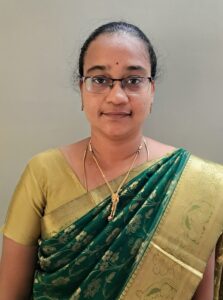
Dr. Padmalatha Ajith, Assistant Professor of Microbiology (SET 2016 Qualified), is an accomplished academic and researcher with a Ph.D. in Microbiology and extensive expertise in teaching, research, and laboratory management. With a strong foundation in curriculum design, advanced microbiological techniques, and student mentorship, Dr. Padmalatha has made significant contributions to both academia and applied research. She has published extensively in peer-reviewed journals indexed in Scopus and Web of Science, and has been actively engaged in national and international conferences, seminars, and academic committees. She is also a lifetime member of the Association of Pharmaceutical Teachers of India (APTI). Her doctoral research, titled “Identification and Structure of Chemical Components of Terminalia chebula Fruit Extracts Against Phytopathogenic Bacteria and Fungi: Efficacy and Allelopathic Effects on Plants”, demonstrated an innovative, eco-friendly approach to controlling bacterial wilt—one of the most devastating plant diseases—through organic, plant-based solutions. Her work offers a sustainable alternative to synthetic fertilizers, paving the way for environmentally safe crop protection and improved agricultural productivity. Dr. Padmalatha possesses profound technical skills in viral cultivation, microbial identification, electrophoresis, molecular analysis (including blotting techniques, SDS-PAGE, PCR), and advanced biochemical tools such as GCMS, NMR, phytochemical analysis, and toxicity testing in plants and seeds. Her academic journey includes an M.Phil. in Biotechnology, a Postgraduate degree in Applied Microbiology, and an Undergraduate degree in Microbiology from the University of Madras. Her research interests lie in Agricultural Microbiology, with a strong focus on sustainable farming practices and the role of microorganisms in improving both human life and environmental health. She is deeply committed to advancing research through innovative proposals, meticulous data analysis, and meaningful interpretation, with the conviction that properly managed microorganisms can positively transform agriculture and society.